
Ward County Arrest Warrants Explained
An arrest warrant is a judge's order authorizing an arrest. It grows out of a sworn showing of probable cause, not out of a public web search. Ward County's 143rd Judicial District Court serves Ward, Loving, and Reeves Counties, and its Ward office handles court information for local district matters. That is where the paper lives. Neither the District Clerk nor the District Court posts an online criminal-warrant form. The Sheriff's page likewise lists no active warrants and runs no warrant-unit phone line. For a specific case, call the court named on the file, or ask the Ward County Sheriff where to route a service question. A Ward County record is a court record, so the court answers first.
Executed Ward County Warrant Access
Texas Code of Criminal Procedure Article 15.26 governs public access to an arrest warrant and its supporting affidavit once the warrant has been executed, subject to the governing criminal-procedure rule. That is an access rule after execution. It promises nothing about active or unexecuted records appearing online. Ask the office holding the Ward County file whether execution has occurred and what copy or docket entry can be released. Some records may be sealed, redacted, or protected by another law. A clerk should name the rule that limits a record when it cannot hand over the full document. Read Chapter 15 for the text of the procedure itself. The statute page shows the law, not a Ward County warrant.
Use the statute to frame an access request, then confirm the Ward County file with its court or agency.
Inside a Ward County Arrest Warrant
A warrant file may include the issuing court, cause number, charge, issue date, judicial officer, affidavit reference, executing agency, return, bond terms, and any later recall or withdrawal. That is the common shape of the record. Ward County publishes no sample record and no local warrant-number format. Ask for a specific field by the court's case number. These are the parts a clerk will look for. Names and dates of birth are personal identifiers, so no example subject appears here.
| Issuing authority | Court and judge tied to the case. |
|---|---|
| Affidavit reference | Sworn basis cited in the record, subject to access limits. |
| Process dates | Issue, execution, return, or status dates when releasable. |
| Service information | Executing agency and return entry, if public. |
| Bond and action | Terms, recall, or withdrawal notation if set and open. |
| Access status | Sealed, juvenile, redacted, or public classification. |
District Records in Ward County
The Ward County District Clerk is the main contact for district-court criminal files, including felony matters. The mailing address is Ward County Courthouse, P.O. Box 440, Monahans, and the phone is 432-943-2751. The 143rd District Court sits at 400 S. Allen, Suite 200. Some original files are kept offsite, and retrieval normally takes about a day. Plan for that delay. The District Clerk says many transactions can be completed by phone, and filings go through eFile Texas or U.S. mail, not fax or email. Call before traveling and ask whether an existing record can be sent electronically. The District Court page gives court and jury information but no public arrest-warrant search and no universal recall procedure. The Ward County District Clerk records and contact page is the office source for these details.
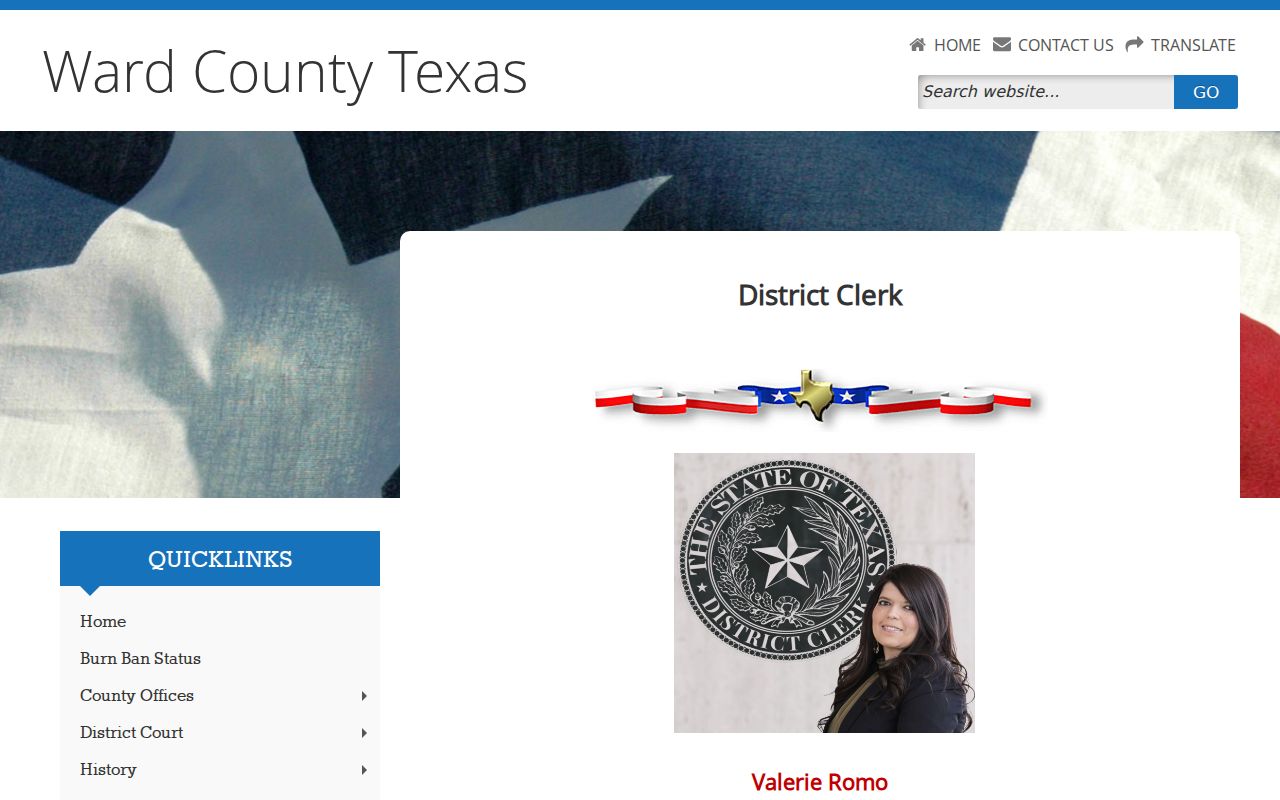
The District Clerk page is the district-file route. The court itself controls judicial action on a warrant. The 143rd Judicial District Court contact page provides court and jury information for the district office in Monahans, and Ward County cases route through it.
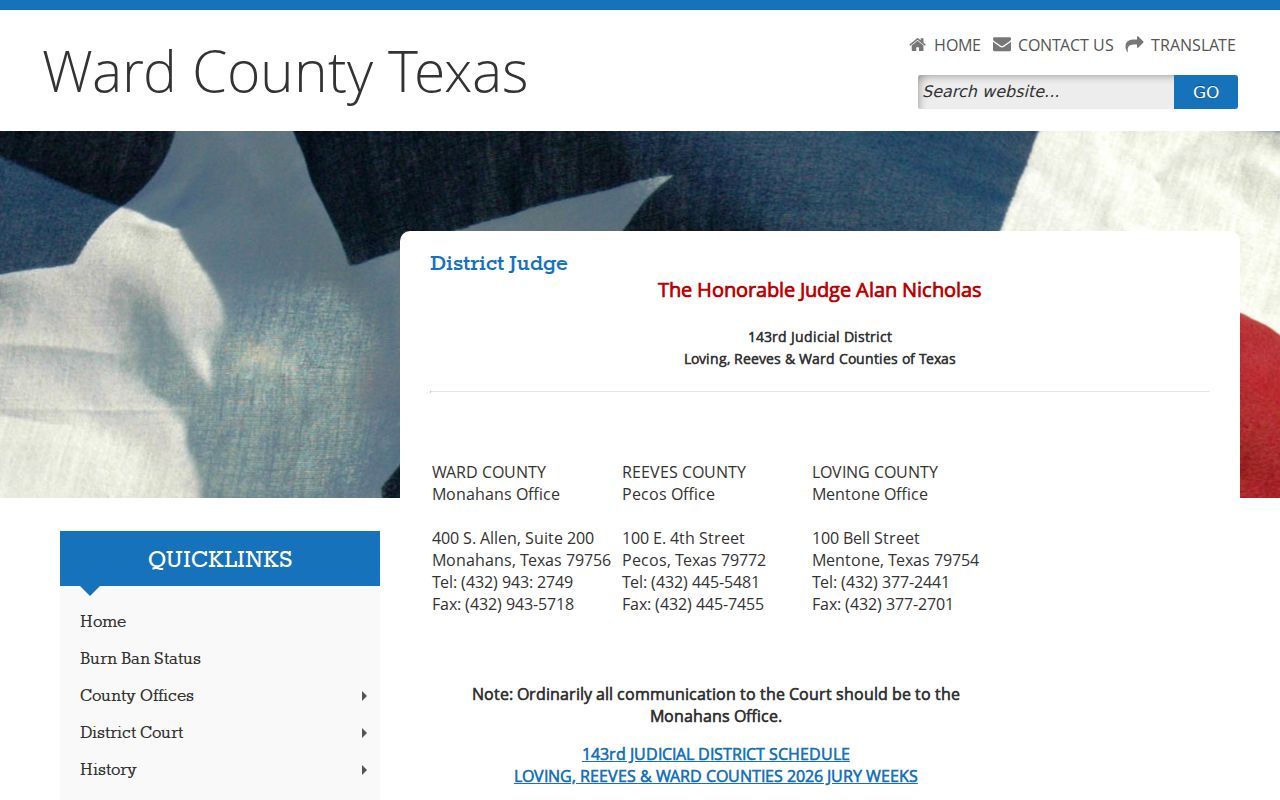
The court contact page names the judicial office; it offers no public warrant search for Ward County.
Serving Arrest Warrants in Ward County
A court issues the order. Law enforcement serves it. Ward County lists the Sheriff and constables but names no dedicated warrant division and publishes no service timetable. The sheriff's general phone line can help route an arrest-process question, though it cannot be counted on to confirm every detail. Do not use a custody lookup to infer warrant status; VINELink, linked from the sheriff page, covers custody only. For an open question about service, give the office the issuing court and case number if you have them, then ask which agency or clerk holds the next record. That keeps a Ward County warrant question moving toward the right office.
Federal Warrants for Ward County Cases
Federal process is separate from the Ward County Sheriff and the 143rd District Court. Ward County sits in the Pecos Division of the U.S. District Court for the Western District of Texas. Federal case records may be available through PACER. PACER is a case-access system, though, not a free county warrant list. The U.S. Marshals Service handles federal judicial process. A federal docket result may be sealed or incomplete in other public tools. If your paperwork names a federal court or marshal, use the division and agency on that paper rather than sending the request to a county clerk. The Pecos Division court locations and the U.S. Marshals Pecos contact page are the official federal routes.
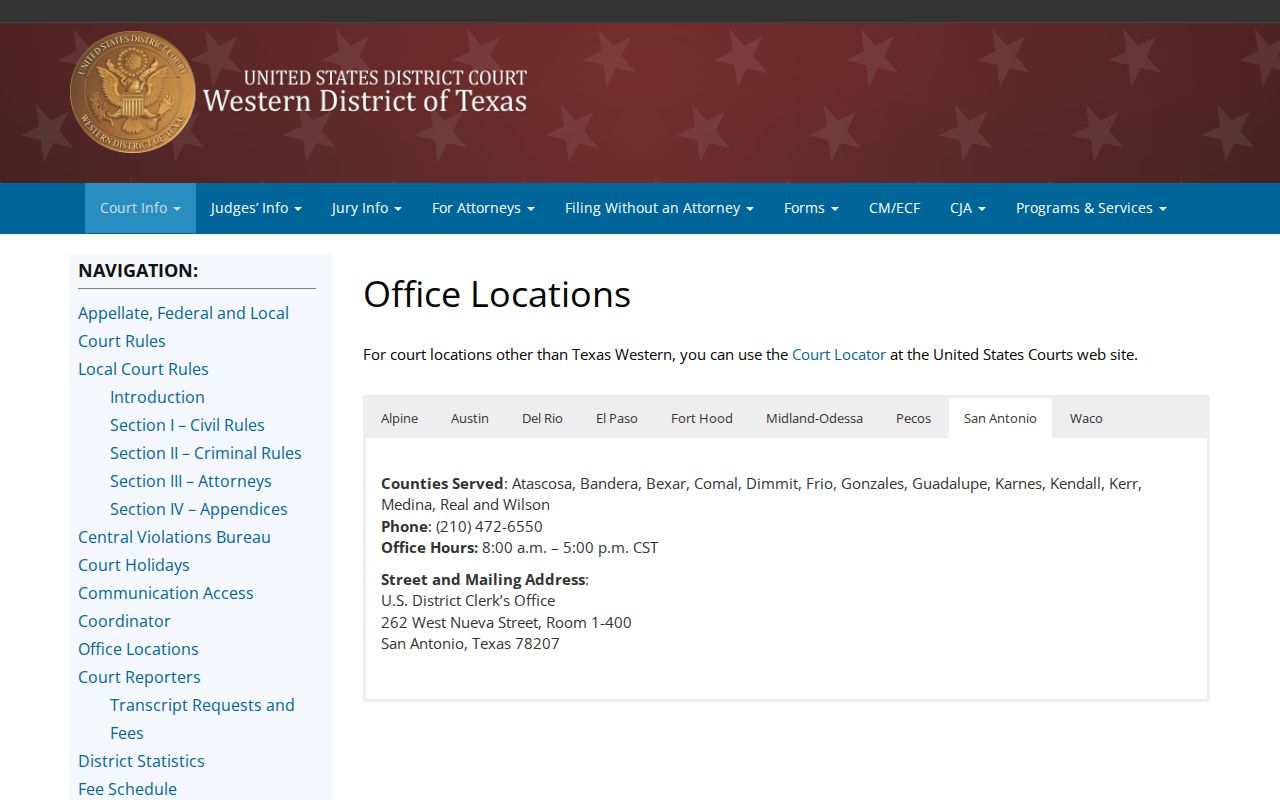
This federal page gives the division context for Ward County cases; it identifies no person and no case.
Comparing Arrest, Summons, and Bench Warrants
A summons just tells you to show up or respond. An arrest warrant lets peace officers take you into custody. A bench warrant comes after a missed court obligation. Three different tools, and the label on a website will not settle which one you face. Read the paperwork, or ask the issuing court directly. Ward County splits its files by court level: the District Clerk keeps district criminal filings, while the JP and municipal clerks hold the lower-court cases. The bench warrant page walks through the missed-court route, and the actual clerk can confirm any case-specific question.
| Document | Purpose | Who to call |
|---|---|---|
| Summons | Notice to appear or respond | Court named on notice |
| Arrest warrant | Judicial authority for arrest | Issuing court and sheriff for routing |
| Bench warrant | Process after a court duty was missed | Court that set the case |
Ward County Warrant Access Limits
Not every warrant record is open. Texas Family Code Chapter 58 keeps a child's arrest warrant records confidential, and other limits can attach to a sealed case, an open investigation, or material a court rule protects. A public-information request does not lift those limits. So ask first. For a government-held record in Ward County, submit a written request for an existing document and name the office that holds it. Judicial records run through the court clerk instead, so ask that clerk how to request the file. If only part of a record is restricted, ask whether a redacted public copy exists. Family Code Chapter 58 is the state source for the juvenile-record rules.
Ward County Arrest Warrant Request Route
Route your request by court. A district criminal file starts with the District Clerk, and you then ask whether the court or another office holds the warrant entry. For a JP or municipal charge in Ward County, call that lower court. The County Clerk excludes felony cases and traffic tickets from its service list, so skip that office for those. A narrow Texas Public Information Act request can reach existing, non-exempt records held by a government body. State the office, the type of record, and a date or case reference. Courts follow a separate access framework, though, so ask the clerk before treating the Act as your route to a court file. The Attorney General's request guide sets out the written request process for public information across Texas.
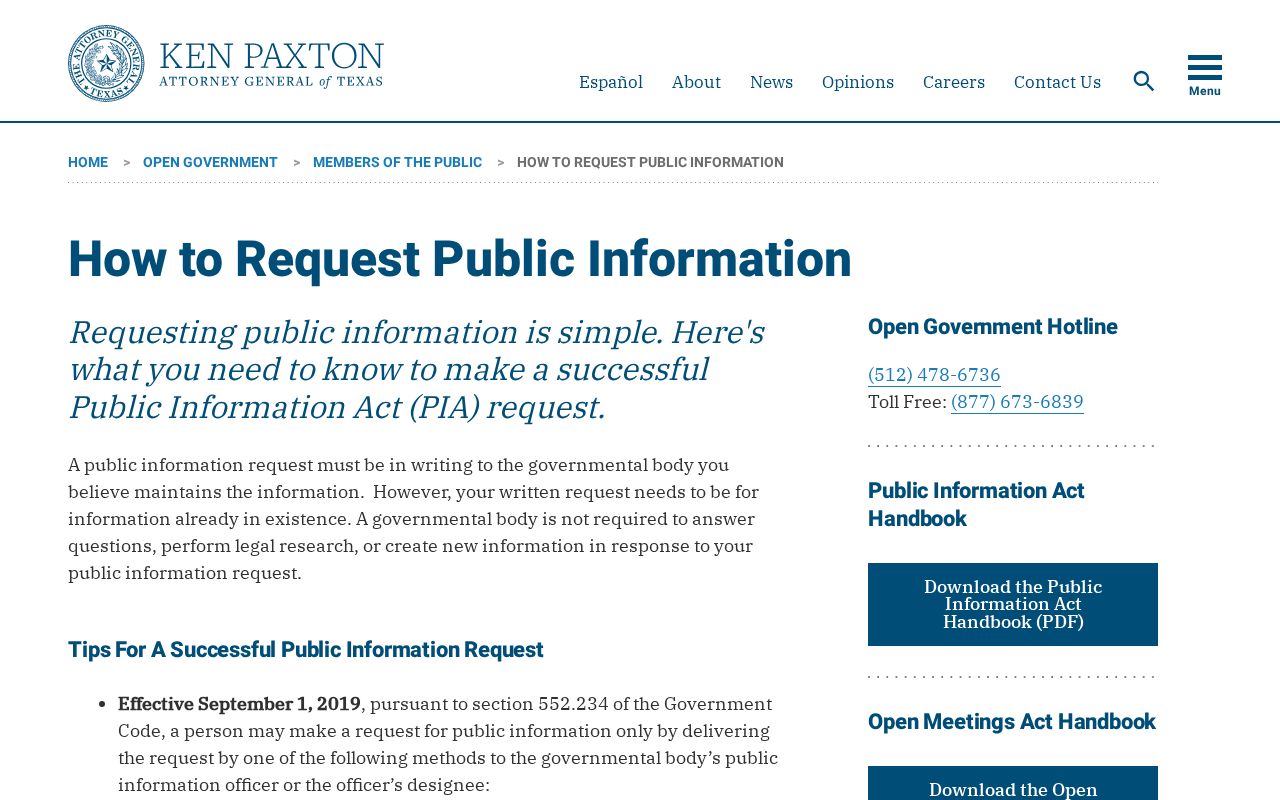
The guide frames a Ward County public-information request; it does not confirm warrant status.
If There's an Arrest Warrant for You
Ward County posts no universal bond schedule, surrender desk, or walk-in instruction. Bond terms depend on the issuing court and the case. So ask before you plan anything. An attorney and the court can tell you whether bond is set, where it can be posted, and whether an appearance or other action is required. Do not treat a citation-portal payment as bond, and paying a fine does not necessarily recall an arrest warrant. Keep every receipt. Ask the court to confirm the docket after any payment. Where a live warrant or an open criminal case creates arrest exposure, a lawyer can help arrange safe contact in Ward County.
Plan first: If you believe an arrest warrant may be active, get legal advice and court instructions before appearing at a sheriff or courthouse office.
The Ward County warrant records overview maps the county, JP, municipal, and sheriff channels.