
Ward County Active Warrants Explained
An active warrant is court process that no one has served, recalled, or closed. The label alone says little. Ward County splits the work. The sheriff, the District Court, the JP courts, and the municipal courts each run their own files, with no shared public search page among them. The county sheriff posts no public warrant list. No lookup form or warrant-unit line appears either. A blank result anywhere does not prove that no warrant exists. Ask the court named on your paper, or have the sheriff route a general question to the right office.
Ward County Has No Active Warrant List
The Ward County Sheriff posts no active-warrant roster. The county pages offer no searchable form of that kind either. What the sheriff does publish is a general phone number and a VINELink link for custody information. VINELink is not a warrant search. A custody result shows who is in jail, not whether a court order is still active. Ward County's news page runs no roundup announcement. There is no update schedule to watch. For a current answer, call the issuing clerk rather than a third-party site or a stale search result. The Ward County Sheriff contact page shows how the office routes questions, not a warrant roster.
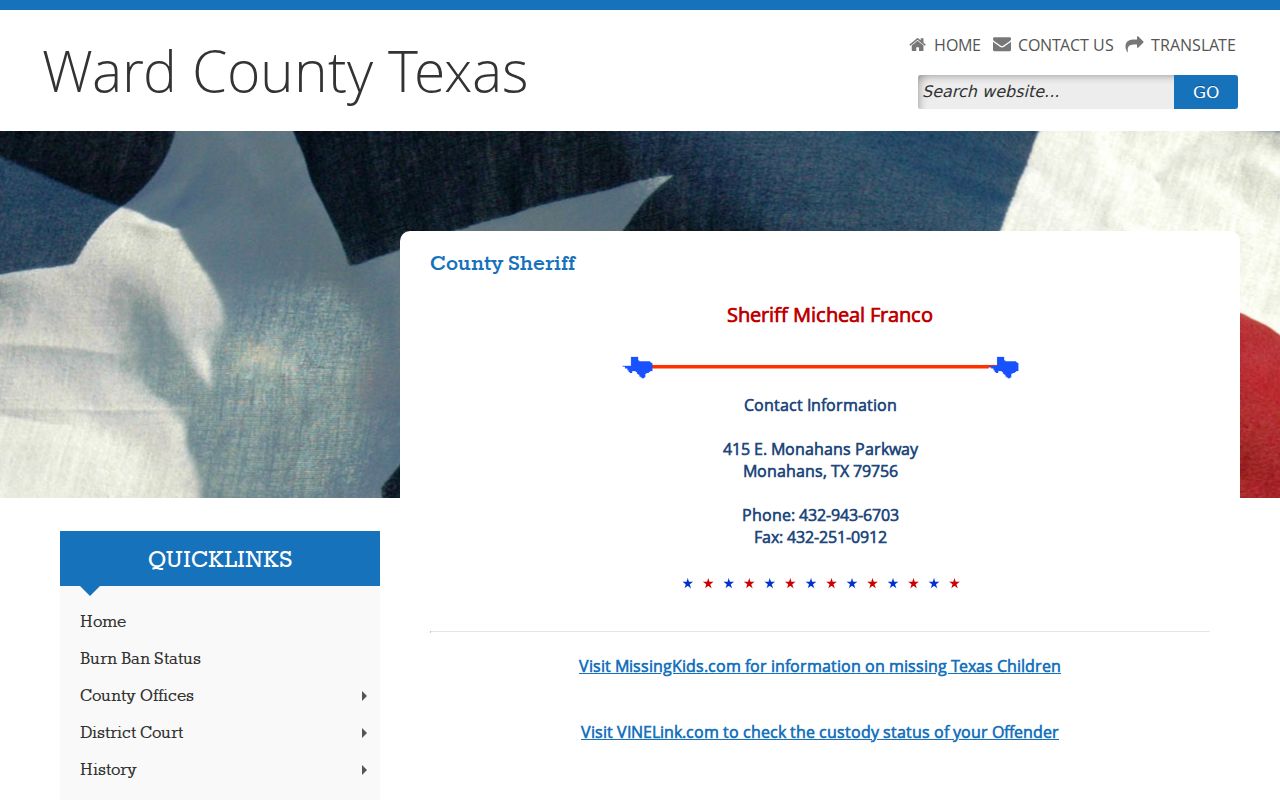
Call the Ward County Sheriff's general line to ask which office handles your question; no dedicated warrant desk exists there.
How Ward County Tracks Active Warrants
Each issuing court keeps its own case file. The 143rd Judicial District Court covers Ward, Loving, and Reeves Counties. The Ward County District Clerk keeps district criminal files. JP citations belong to the named precinct. Monahans and Wickett both run municipal courts. The state's Office of Court Administration directory, dated August 7, 2025, lists both cities. It is a contact list, not a warrant database. No person-level records appear in it. The county's two JP offices link to citation payment, and the Monahans court posts its own payment options. None of it replaces a docket check with the issuing court. The OCA directory lists court contacts only, so ask a municipal clerk whether a case has current process and how to resolve it.
Inside an Active Warrant Record
A case file can hold the court, cause number, process type, dates, charge, and service return. It may also note a recall, a withdrawal, or a bond term. Ward County has no single public screen with those fields. Ask the specific clerk what it keeps. Active status changes when a court acts or an officer returns process. Search pages can lag. Separate court systems in Ward County may not update at the same time. Treat any result as a point in time, and confirm with the office that holds the record.
| Court or precinct | Office whose docket holds the process. |
|---|---|
| Case number | Cause or citation key used to find the file. |
| Process entry | Type, issue date, and judicial action. |
| Return or recall | Service, withdrawal, or other status event if public. |
| Bond terms | Any terms set by the court and open for release. |
Ward County Sheriff Contact Is General Only
The Ward County Sheriff sits at 415 E. Monahans Parkway in Monahans. Its page lists a general phone line. No warrant-unit number, hours, surrender steps, bond schedule, or records request form appears there. Ask where to route a court question. Then contact the issuing clerk directly. Ward County's constable page offers office contacts too. It assigns no warrant service and lists nothing searchable. Do not guess which officer holds a case from the directory alone. A district warrant question belongs with the District Clerk or the court, while a JP citation goes to the precinct shown on the ticket.
Ward County Warrant Roundups and Public Lists
Ward County publishes no roundup, amnesty event, or local most-wanted roster. Neither page carries one. The Texas Crime Stoppers directory is a statewide tip resource. It does not create a Ward County list or a local reward program. A roundup notice, if one ever runs, should be read for its issuing court, date, and terms. It would not replace the court's case record. The Ward County Most Wanted List page explains the difference between an official tip program and a full active-warrant list. Any roundup news would come through official Ward County channels. Check official Ward County news for notices; no such program notice is posted.
Ward County Warrants Across Court Lines
A citation balance can show as paid in one system while a Ward County court still has open process on its docket. Payment runs through the JP-linked GovRec site. The DPS Failure to Appear/Failure to Pay program, meanwhile, is tied to driver-license renewal compliance. Texas publishes no single statewide criminal-warrant search. DPS sends people back to the court that issued the citation, and that is the right call. Ask that court directly whether a failure to appear or pay was reported, whether a warrant was issued, and whether anything more is required after payment. A license status is no substitute for the court's own answer. The Texas Court Reminder Program sends reminders about upcoming settings. It is a missed-appearance tool, not a status check or a way to recall a warrant.
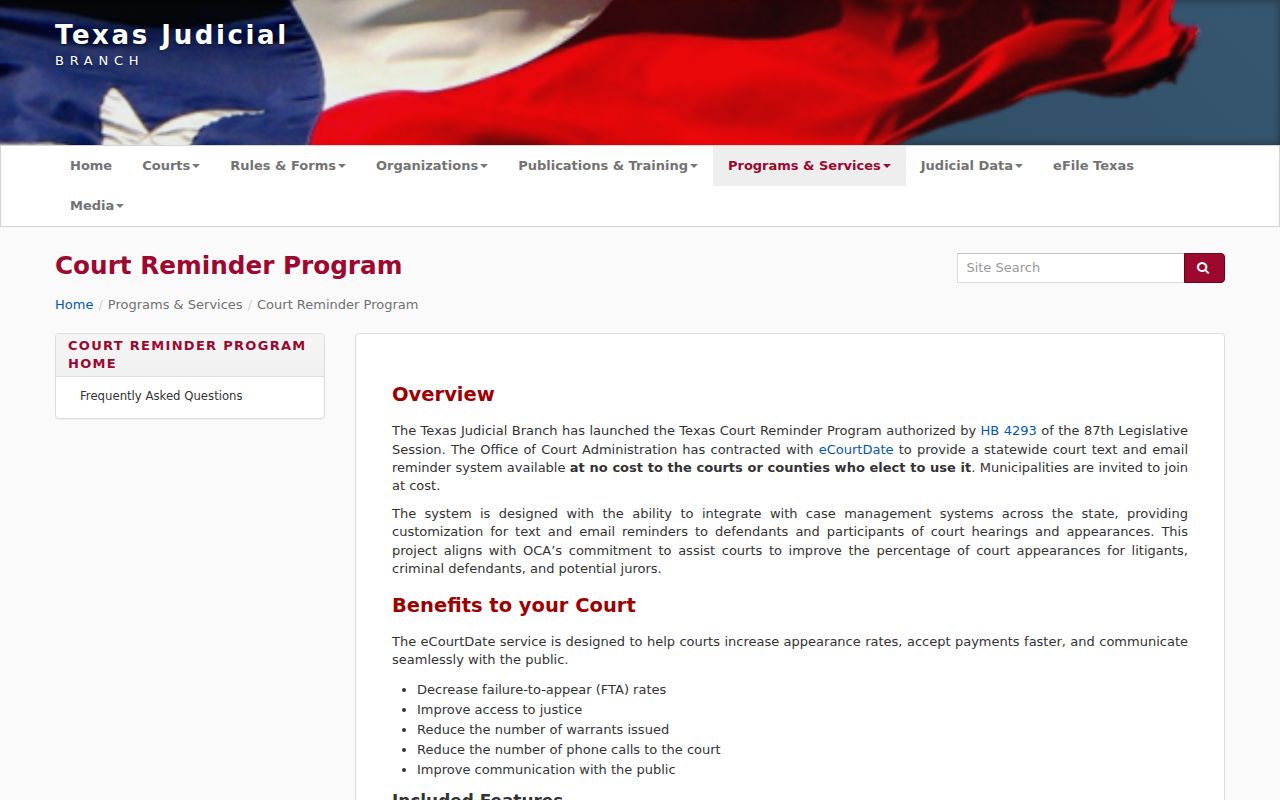
The program's statewide materials do not say whether any Ward County court takes part, so ask the court itself.
When Your Name Is on the Warrant List
Start by confirming the listing really is you. Match the name to the right person and the right court. Never post another person's details or confront anyone over an online result. Call the court named in the entry and ask what it can verify on the phone. If the record involves an arrest, talk with a Texas attorney before walking into an office or paying anything. For an active matter, ask for the case number, any setting, and how to seek a recall, quash, bond, or appearance. Those are different court actions with different effects. Ward County publishes no universal walk-in warrant procedure, so the issuing judge or clerk sets the current steps for your case.
Take care with a match: A name alone can fit more than one person. Confirm the court and case with the issuing office before acting.
Ward County Warrant Status Changes
Any Ward County list runs thin for ordinary reasons. It may cover just one court, leave out restricted records, or sit waiting on a clerk's update. A missing name does not prove that no warrant exists. A name that appears is not a full case file either, and it says nothing about how a charge ends. When you make a public record request, describe an existing record and name the office that holds it. The Texas Attorney General request guide walks through the written process for government bodies. Judicial records follow separate access rules, and the court may point you to its clerk.
Ward County Warrant Reports Cannot Count
Ward County's 2024 audit and adopted budgets track Sheriff, Jail, JP, Constable, and fines-and-fees categories. Those figures show spending and revenue. They do not count active warrants, list sizes, or clearance rates, so do not stretch a budget line into a claim about outstanding process. Instead, ask the court about a specific citation, or request an existing dated report if one is kept. The District Clerk also warns that some original records sit offsite, and retrieval can take about a day. A phone call first saves a wasted trip. See the District Clerk contact and retrieval notes for the current details.
Verify With the Issuing Court
Ward County warrant status gets confirmed by the office holding the record, not by guesswork. The sheriff can route a question but runs no published all-courts search. District criminal files live with the District Clerk. A lower-court citation belongs to the JP precinct or municipal clerk printed on the paper you received. Keep the response date, plus any receipt or court instruction. When an answer stays unclear, ask which office holds the next record and how final status gets confirmed. The county warrant records overview lays out every local court and agency path.